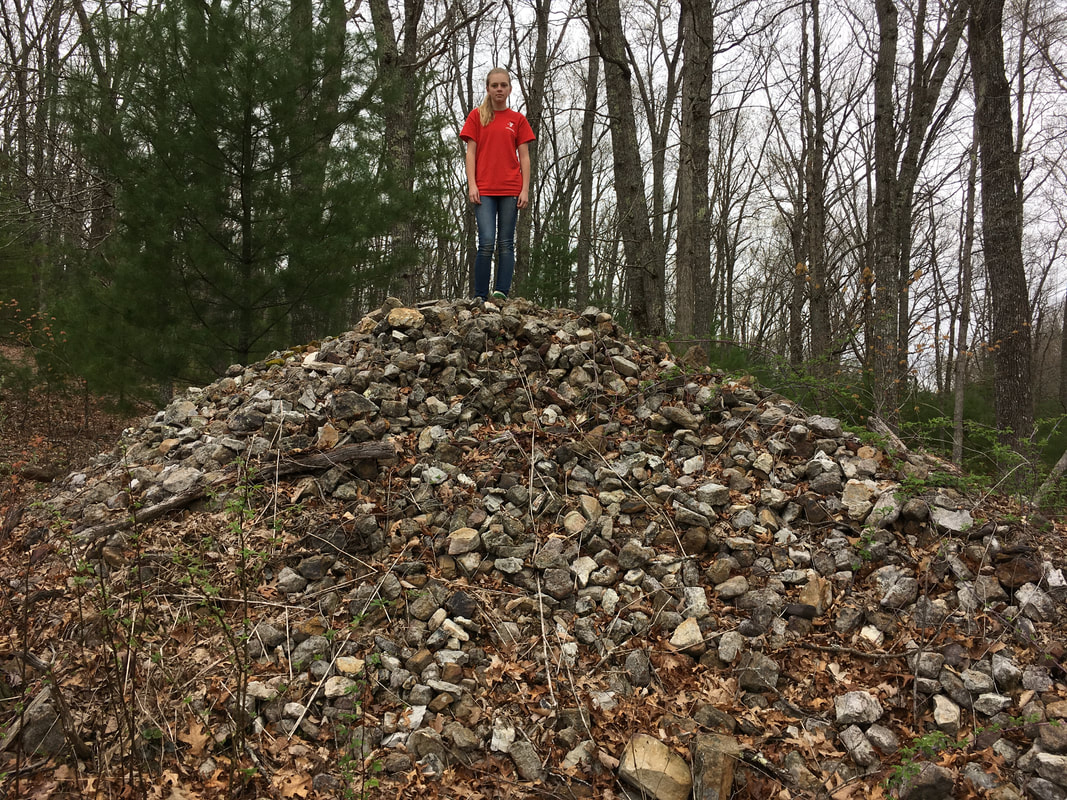
 Iva... At the Jamison Family Farm, one thing for which there is no shortage are rocks! The rock pile Iva is standing on is one piled-up by my great grandfather - James Henry Jamison. There are several rock piles of the same size around the farm - "over the hill". James Henry would have farmed with horse pulled implements such as a single bottom moldboard plow. Occasionally, we find a broken plowshare; I imagine rocks in that pile exacted a price on his plows from time to time. James Henry probably was planting wheat, maybe corn or beans of some sort in those fields, perhaps some Timothy hay... When I was a boy, these fields served as pasture for cattle. To the extent we can safely use a tractor on them, one by one, we are transforming these old overgrown pastures into First Quality Hay fields. As we do so - I am reminded some things never change - even across generations. Just as James Henry carried rocks out of these fields, we find ourselves doing the same... 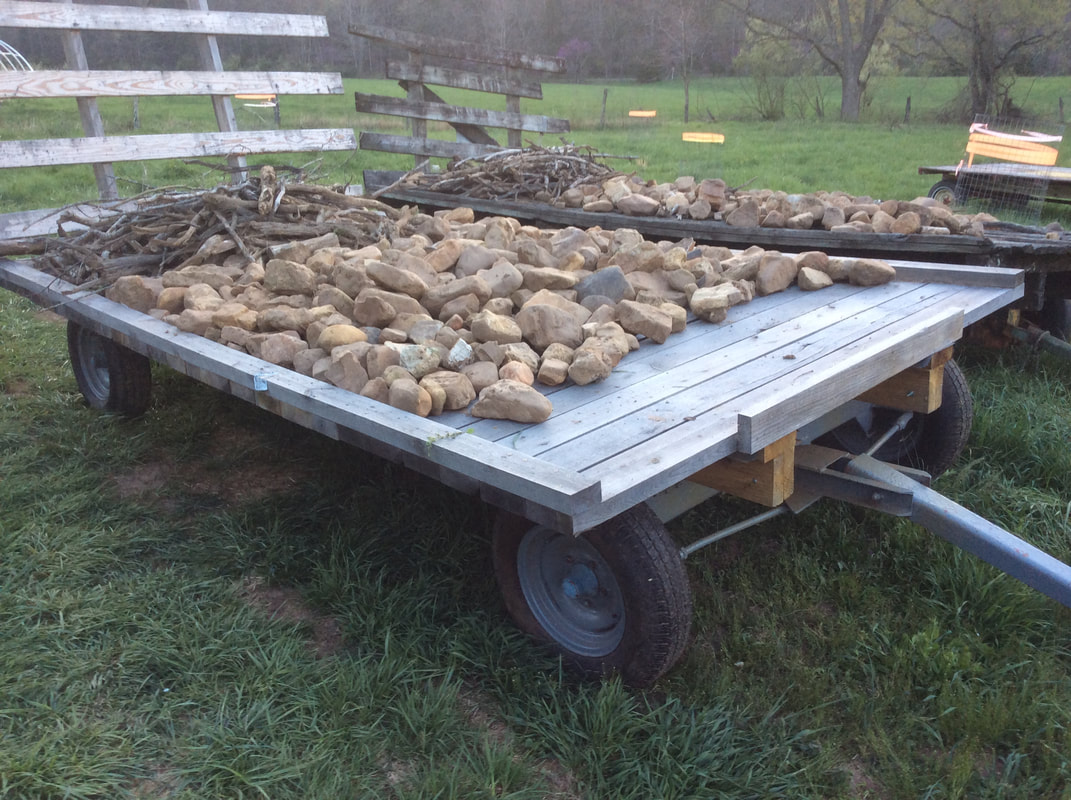 We're not so big that we can't walk our fields and give them individual attention. Before our hay grows so tall one can't see them, we are walking the tree-lines bordering our hay fields and picking up limbs and sticks that have fallen over the winter. 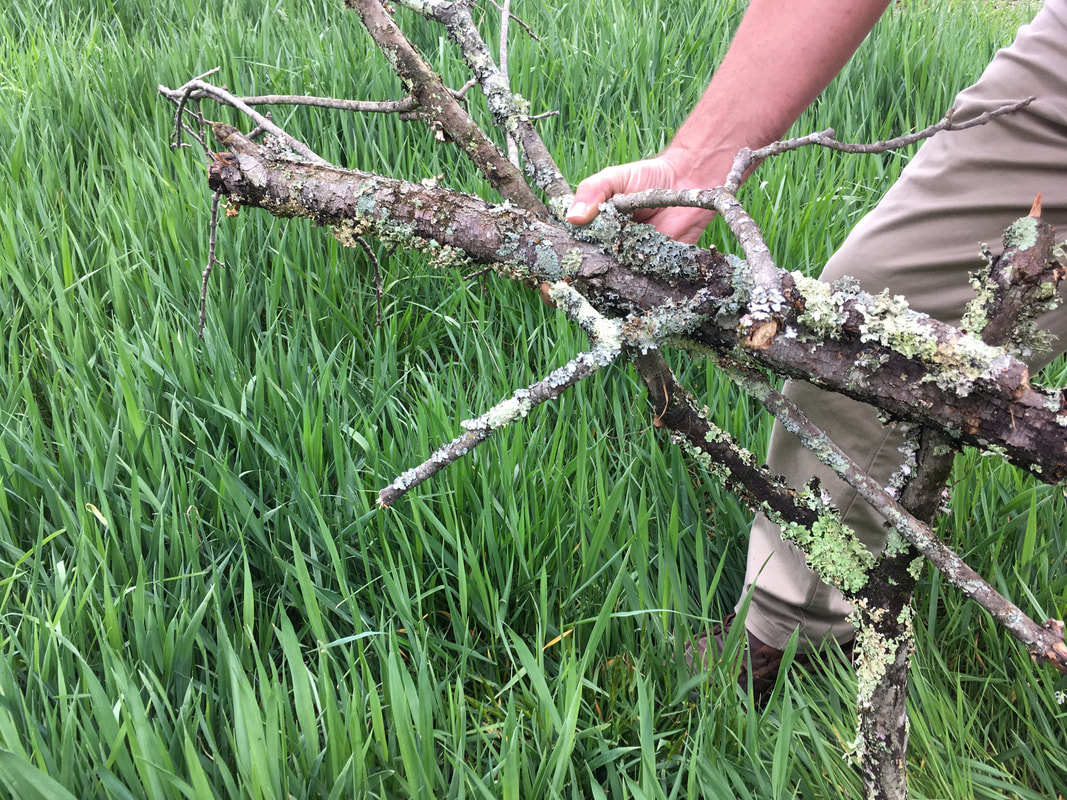 While this has been an extended cold spring, I AM reminded it IS spring on the farm and warmer weather is on the way... 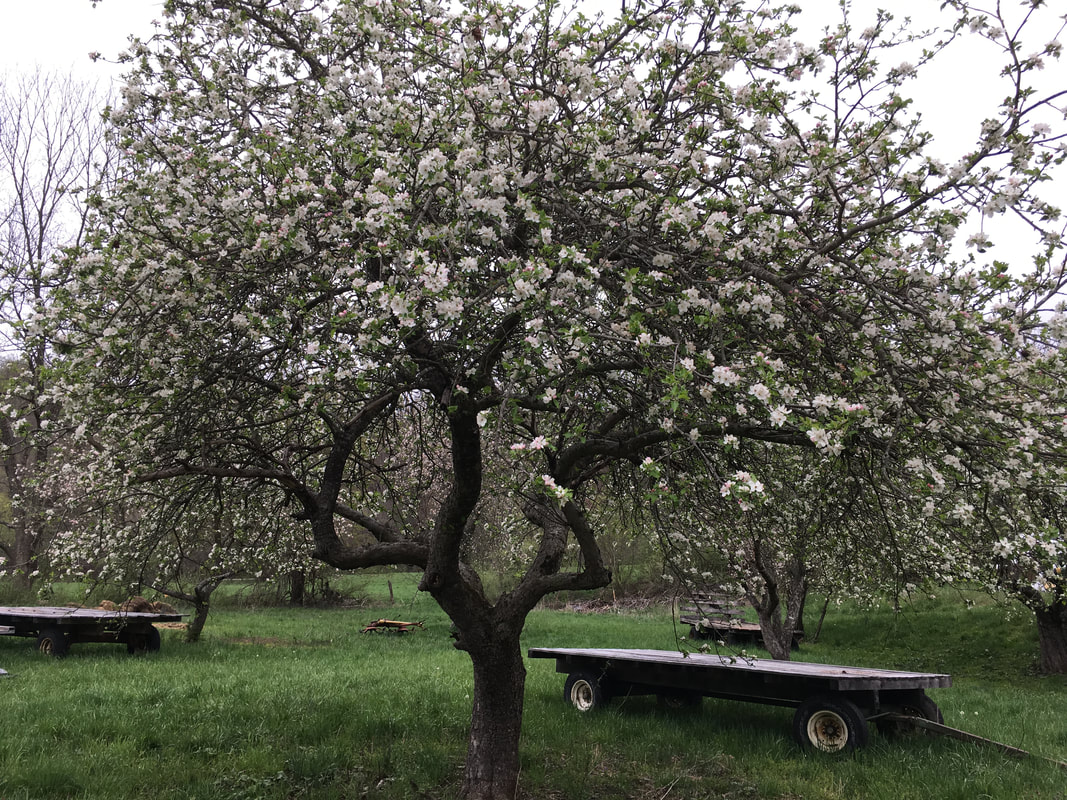 Apple trees in bloom... Our Timothy hay is coming along nicely. This past weekend, I was able to spray a non-residual broadleaf herbicide to control weeds. In addition, our stands are dense in all fields and in my opinion, more than anything, that is our best herbicide. Anything can happen, but I think we are on our way to a very good year with respect to hay quality and overall volume.
The goal is to begin cutting in the days preceding Memorial Day weekend and continuing into mid-June until finished baling for our first cutting. Due to the colder spring weather, this time line might slip - we'll see. From now until we begin cutting hay, the frequency of facebook page and blog posts will increase - stay tuned, First Quality Hay is on the way...
0 Comments
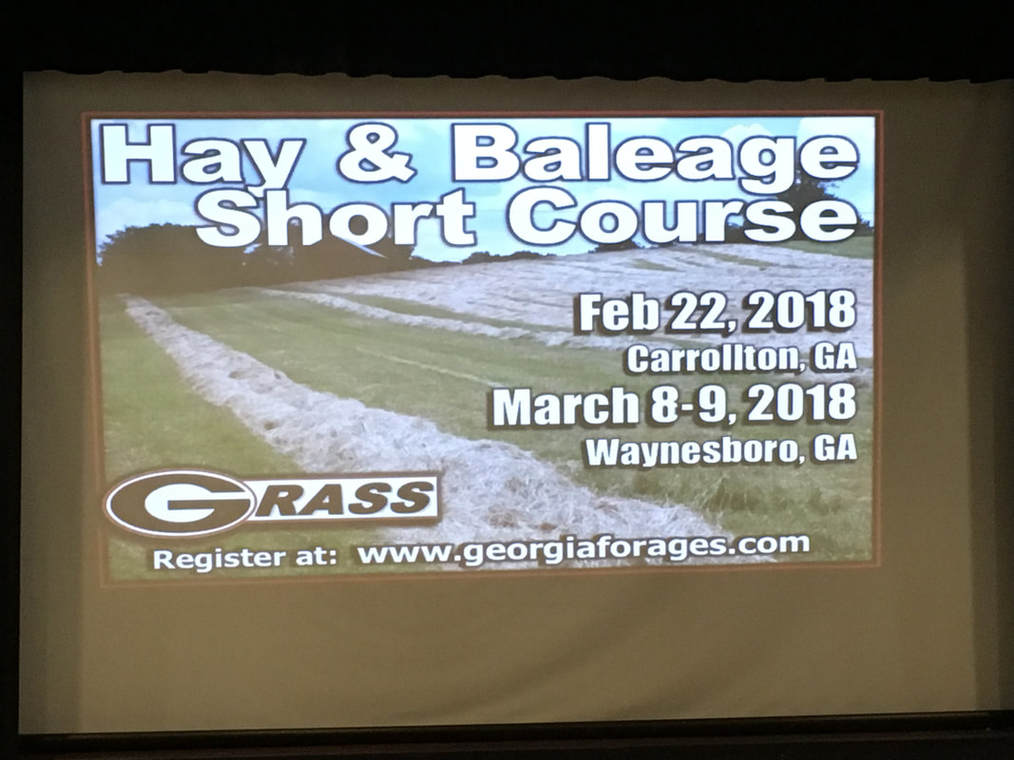 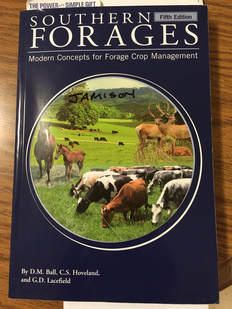 This past March 8th and 9th, I attended a Hay and Baleage Short Course put on by the University of Georgia Cooperative Extension. The location was in Waynesboro GA, just South of Augusta. There was an incredible amount of info dispensed at the course and one thing stood out to me above all else, the University of Georgia takes haying seriously. I think all but one topic was presented by a Phd of some discipline and the one person that didn't have a Phd, was working on one. The depth of knowledge amongst these folks was steep. I listened, took notes and asked a lot of questions.
Topics were: 1. How to Cut, Cure and Handle High Quality Hay. 2. Preventing Hay Molding and Heating. 3. Hay Storage Systems. 4. Hay for Horses: Figuring Out What Horse Owners Want. 5. Climate Outlook and Implications for the Hay Market. 6. Drought Management 7. Problem Insects and What to Do About Them. 8. Problem Weeds and What to Do About Them. 9. The Uptake, Mode of Action and Fate of Herbicides Used in Hayfields. 10. Herbicide Resistance: A Growing Issue for Hay Producers. 11. Understanding Forage Quality. 12. Improving Forage Quality. 13. Balancing a Ration Utilizing Hay Samples. 14. Fine-Tuning Forage Fertilization. 15. Alfalfa Production in the South. 16. Forage Bermudagrass Varietees for Southeastern Hay Producers. 17. Methods for Vegetative Establishment. 18. Economics of Baled Silage. 19. Keys to Making Baled Silage. Friday afternoon, we left the Extension office building class-room/auditorium and met at the Southeast Research and Education Center - a research farm of about 700 acres if I recall correctly. There we watched demos of haying equipment, but most importantly the UGA staff demonstrated equipment used to take hay forage samples, methods for forage analysis, as well as, soil and plant tissue sampling. Rolled-up in all of this was interpreting the results. Prior to going, we were asked to purchase and read the following book, "Southern Forages." It is a book I would recommend. Question: Why attend such a conference? I burned a couple days of my day job vacation and there was a fair amount of expense involved. Answer: At the Jamison Family Farm, we want to know what we are doing and why - every step of the way. This Hay and Baleage Short Course was a means to that end. Continuing education is an integral part of making First Quality Hay. Took some time out today to have a walk about and a look-see at three new hay fields we are bringing online this year; all planted in Clair Timothy. These fields were planted last fall and I was anxious to see if they survived the winter cold. Knock on wood, so far, so good. Below is a pic of timothy coming in the "Bull Pasture". 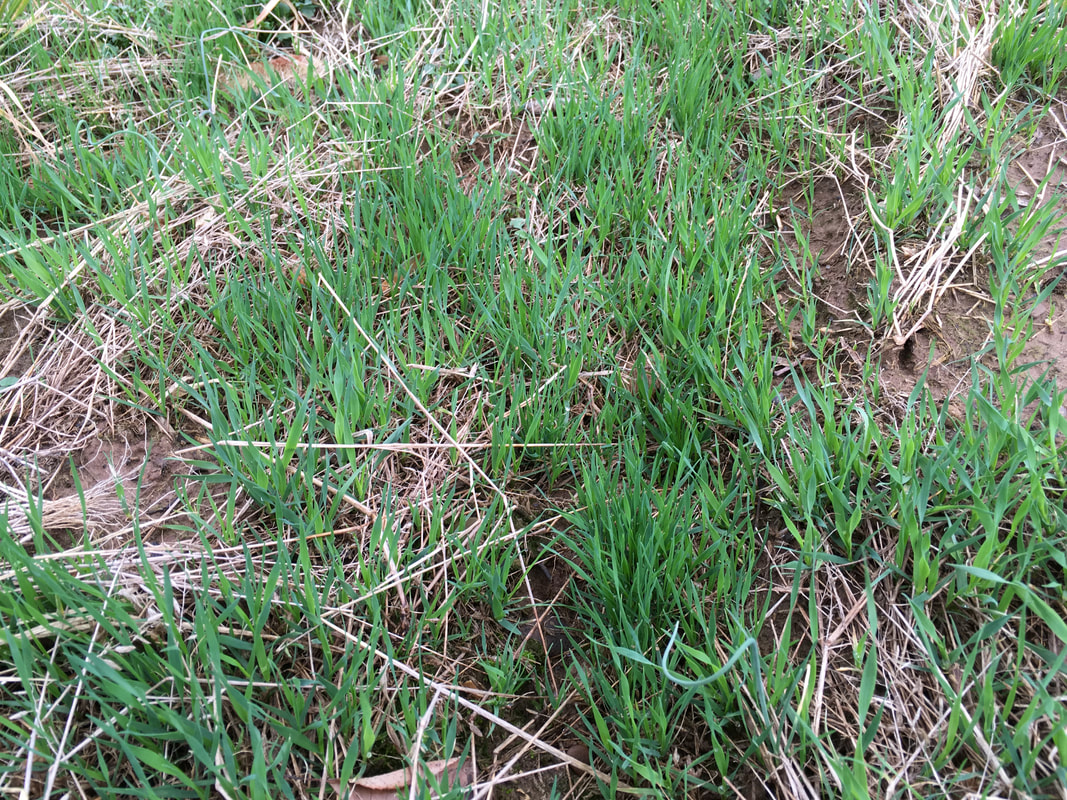 Next on my walk, I went "across the road" to a couple other fields, starting with the "Orchard Field"... 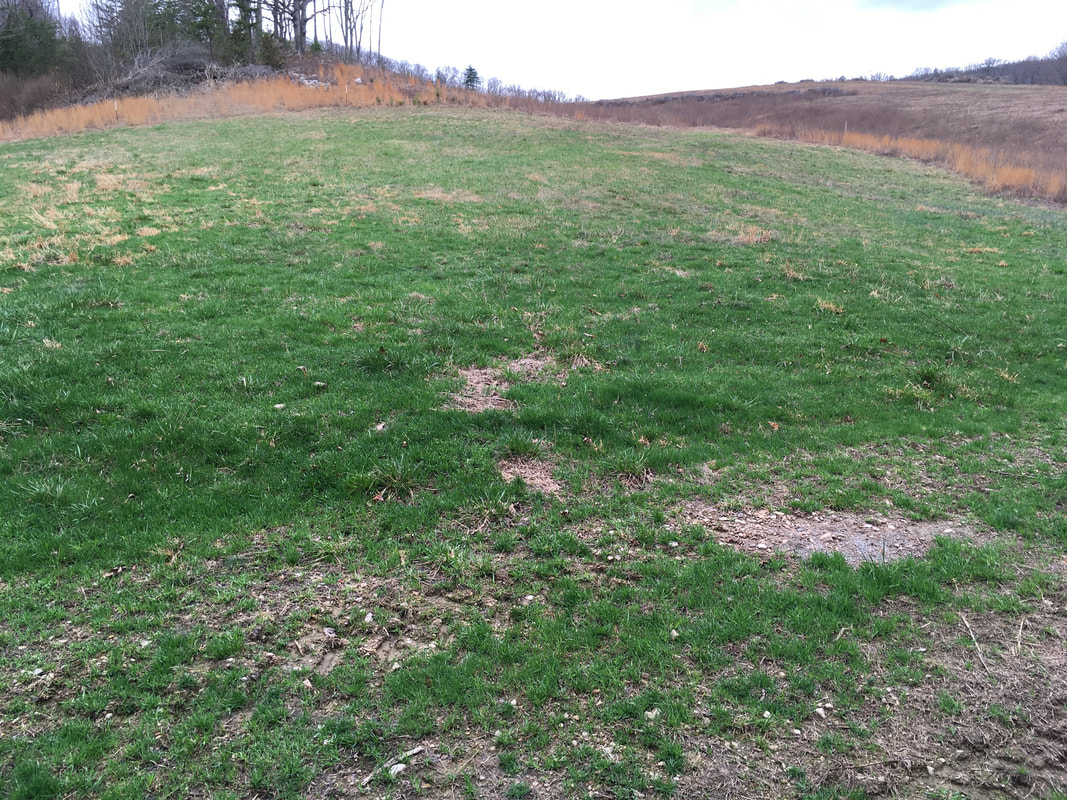 Then I made my way (on foot) to "Crown Hill". Here is a pic along the way. From a distance, note the green strip at the top. That is timothy growing on Crown Hill. 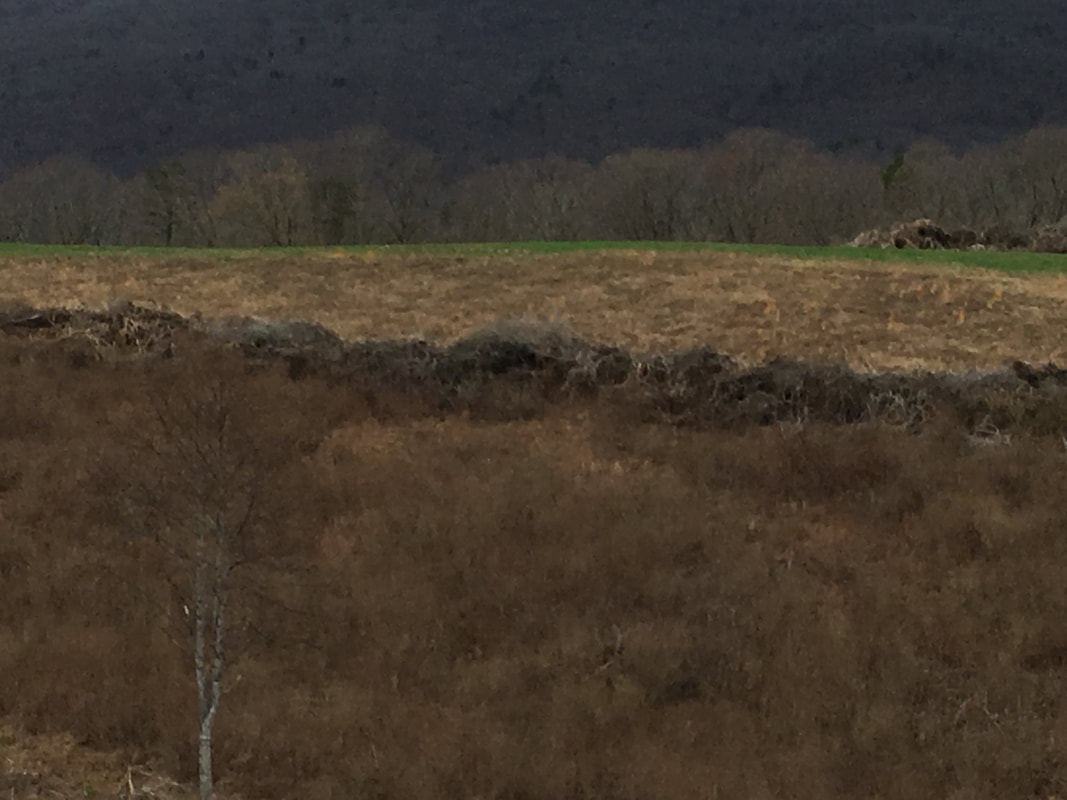 Working my way to the left from the above view, I continued to hike up - making my way around to a spot above Crown Hill. You can see a divot in the field, that's where the name, "Crown Hill" originates. 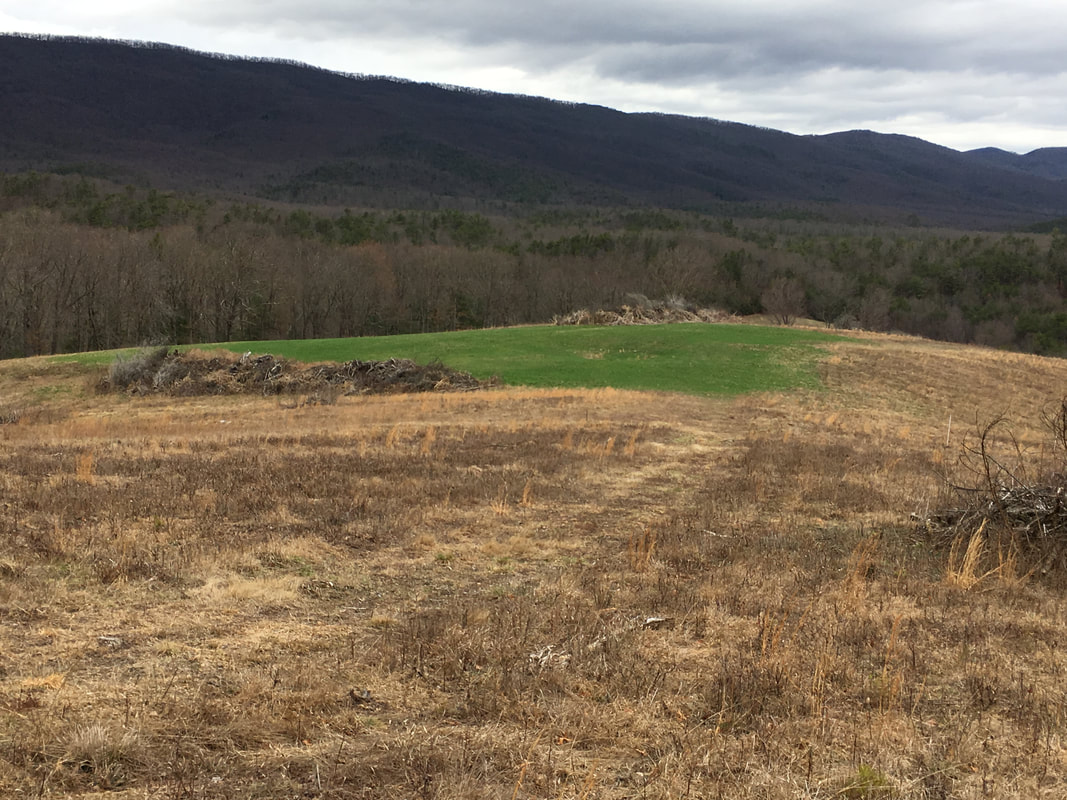 And then Crown Hill... 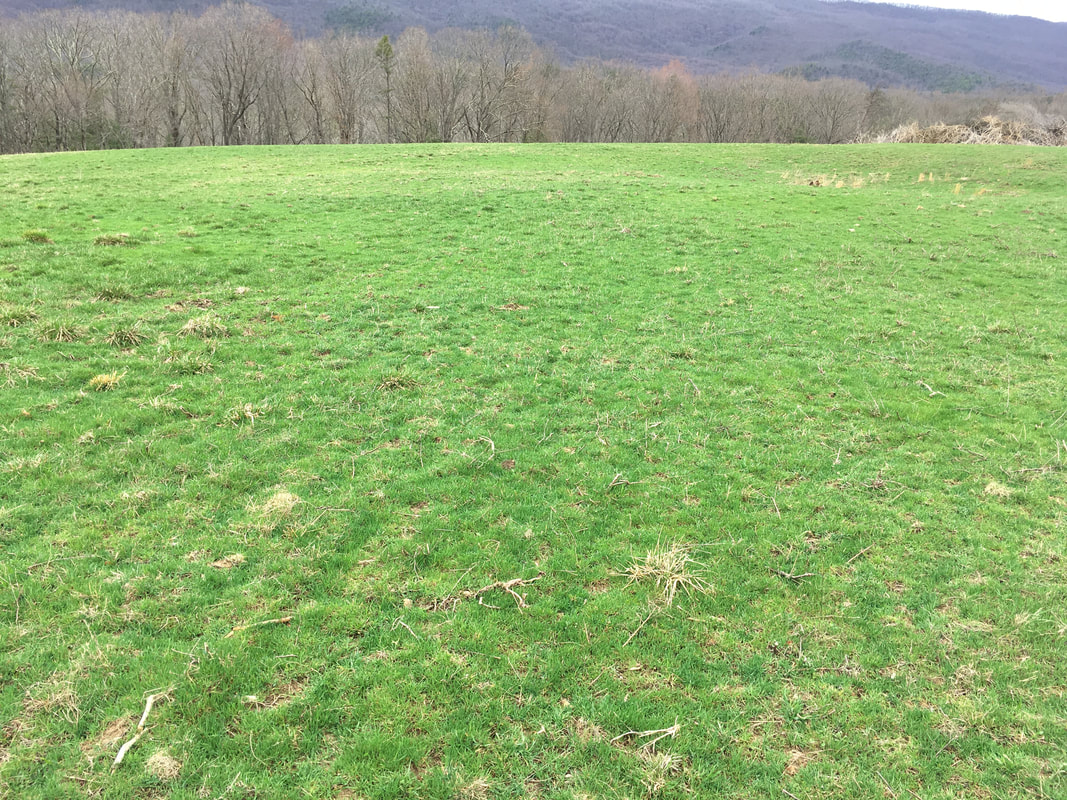 Alleghany County use to be a place where iron ore was mined. Just down the road towards Covington is a spot called Jordan Mines. Potts Creek Runs through it and there are old pictures of a community that once thrived there; houses and buildings on both sides of the creek. On our farm, we occasionally stumble onto a rusty rock that might have been a candidate for an iron furnace back in the day. I encountered such a rock today while out walking on the farm... 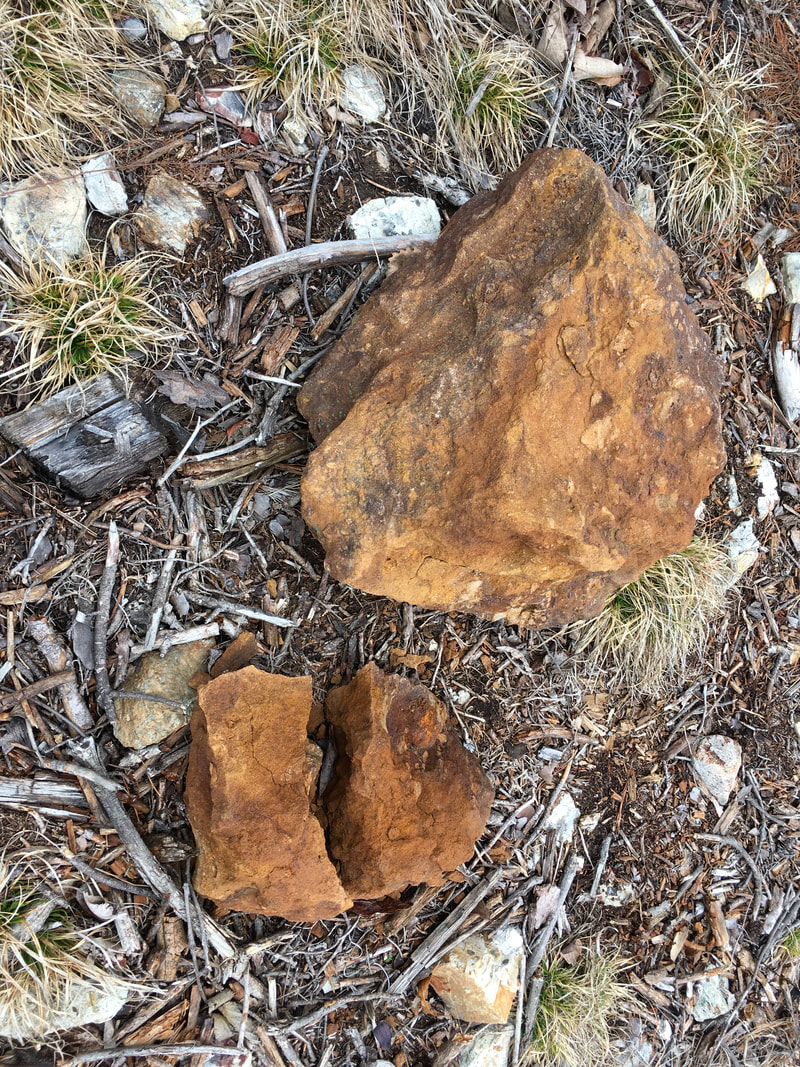 When I finished my walk about, I turned my attention to my old Massey Ferguson Model 50 Diesel tractor. It has been plagued with wiring issues and most recently a flat rear tire! With the tire fixed, I spent a goodly amount of time getting the electrical straightened-out and the tractor runs again! Fine machine too. It is a 1962 year make and so am I. Not sure which of us is in better or worse condition... A bit of trivia. If you look at the hood ornament, you will see three triangles. One with a tractor in it and the other two with "M" and "F" respectively. Harry Ferguson invented the 3 point hitch that is standard equipment on all tractors today. Other manufacturers tried their hitch arrangements, International Harvester had a 2-point Fast Hitch, Allis Chalmers had a some kind of upside down 3-point hitch - I forget the name of it. Case had their Eagle hitch. The Ferguson System, as it was called, eventually won out (with help from Ford) and is the standard today. The three triangles in the MF logo represent the 3-point hitch. 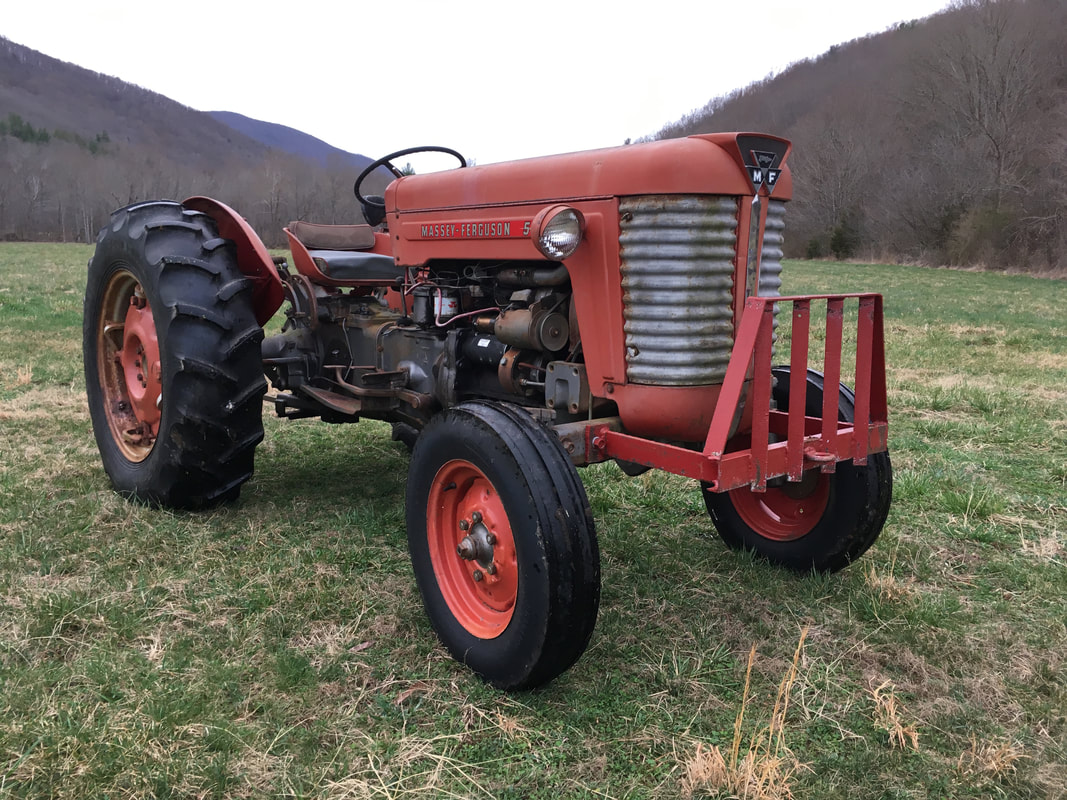 I'm continuing to pull Autumn Olives on the "10" in preparation for a Summer Teff grass field. I'll start fertilizing the timothy fields in a week or two. Fertilizer is generally referred by NPK - Nitrogen, Phosphorus and Pot Ash. The amount of fertilizer we put down is driven by expected yields coupled with soil sample analysis' by Virginia Tech. Typically P and K are put down in the fall. N goes down in the spring and after each cutting.
On another note... I was contacted by a gentleman who raises Alpacas. I really don't know much about them. We've been totally focused on making horse quality square bales of hay. Higher quality hay raised specifically with the horse in mind has been our niche and for those horse owners that recognize it, it is nice to work with folks that know and value REAL hay quality backed-up by forage testing from Equi-Analytical vs. some Craigslist "horse quality hay" labeled ad. I'm finding that Alpaca owners have special needs/requirements for their hay too. We are not a big farm; my hands touch just about every square bale of hay and sometimes three or four times over. Being smaller allows us agility and a certain attention to what we grow that might be more difficult for a BTO farm. As such, we can pivot and produce focused/quality hay for a special need. I'm interested in investigating a bit of hay for Alpacas. In the photos above, there was some very nice green timothy growing. There were also a lot of brown areas. Until we planted the timothy, everything was brown. Anywhere on this farm we can safely put a tractor, we are going to raise quality hay - but it takes time to develop/reclaim these fields. As we do, we will continue to expand our timothy and teff, and to the extent there is Alpaca interest, we'll peal off some acreage for Alpaca specific hay. If you know someone with Alpacas that needs quality hay, ask them to shoot me an e-mail at FirstQualityHay@icloud.com - I've got questions. For those of you interested in our timothy and teff - it's on the way!!!! Seems like the older I get, the faster time flies. The race for first cutting hay has already begun. January is at an end, February is a short month and March 1st we start fertilizing. It's after midnight; I ought to be in bed! Between now and that first cut, I'll be clearing a new field which will see a very early cut of mixed grass from what's already there and then planted in teff grass for the summer. I may clear another smaller field for teff grass too - if I can find the time. We'll hit our fields with a non-residual herbicide to control broadleaf weeds in early April and spray for cereal rust mites, which can devastate a timothy field. Hopefully we will take a first cut of timothy and timothy mixed hay Memorial Day weekend. Samples will be taken as the hay is baled and forwarded to Equi-Analytical for forage testing to establish the quality of the hay prior to sale. Between now and Memorial day, I've got some hay shelters to move and probably will erect a new one. I've added a kicker to my baler and will be building/installing kicker racks to my wagons. Three wagons need new beds, so I'll be doing that too. Need to put up a few gates and do some mechanical repairs to a couple of ancient tractors to get them field ready in time for haying. Lots to do, not much time; the clock is ticking! I said all of that to say this - last fall we sold out of hay early. I have been receiving steady requests for hay throughout the winter. IMHO - there is a shortage in our area of decent hay, which I believe may exacerbate the situation for this coming Summer/Fall due to depleted inventories. These things go in cycles. If you are interested in hay for 2018, you might consider buying earlier vs. later. As our hay season unfolds for 2018, we will post updates as to our timeline and progress towards making quality square bales of hay. I would especially encourage following our Facebook page for alerts. Feel free to share this webpage and our Facebook page with anyone you know that might need quality hay come next spring/summer/fall. It will be here sooner than later! On the other hand, May the Hay Dog doesn't seem to be to alarmed... 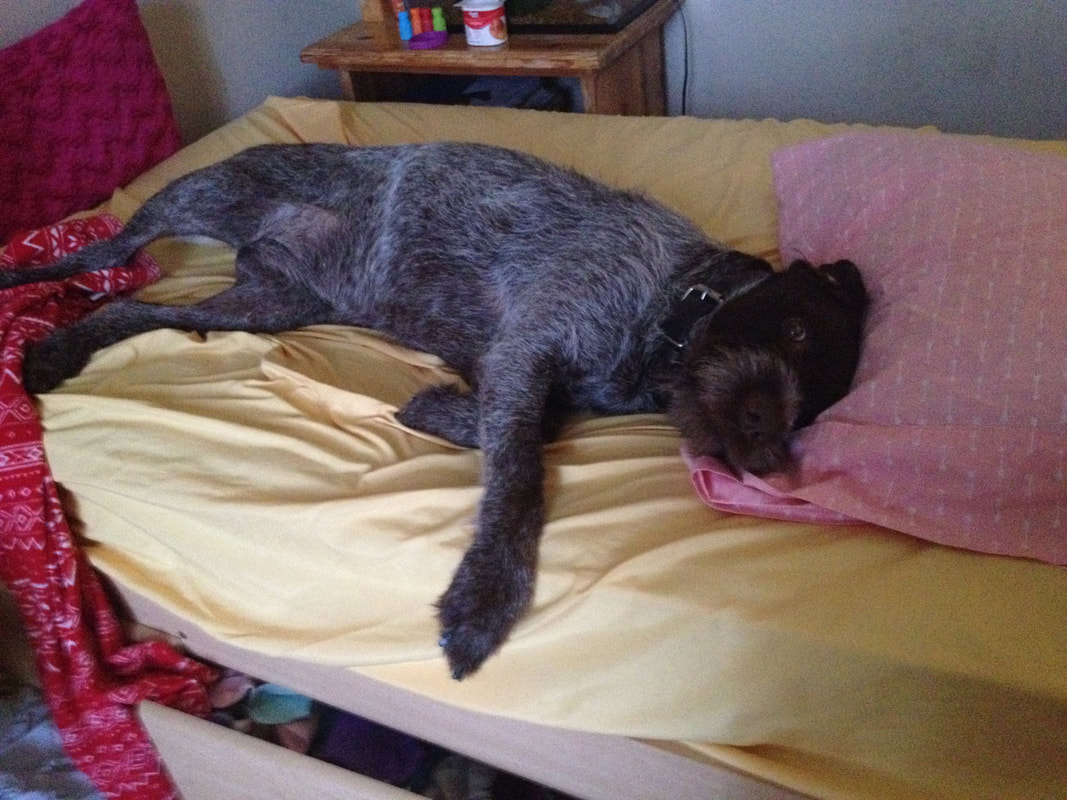 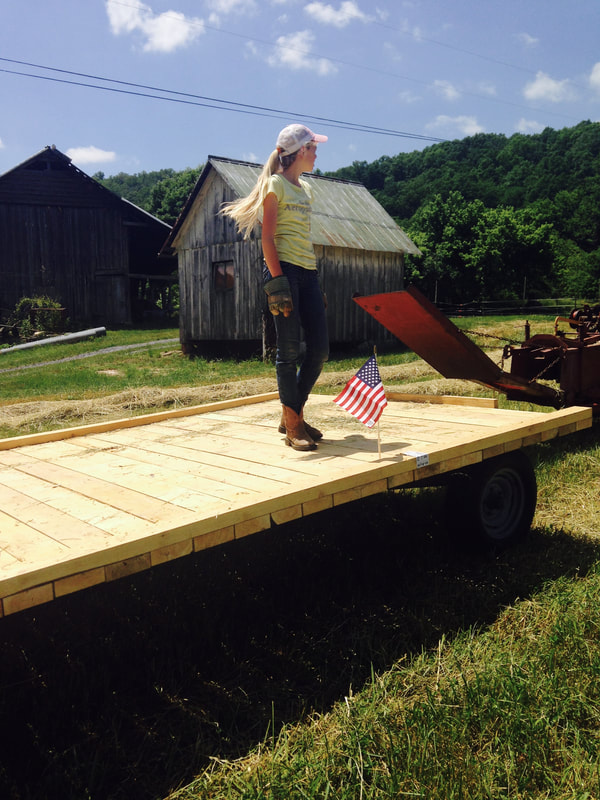 Iva 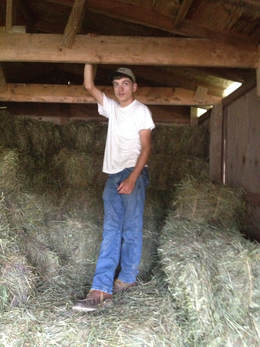 Nathaniel - my oldest boy Nathaniel - my oldest boy At the Jamison Family Farm, every field has a name and almost all of them predate me as my great grandfather started this farm. There is the upper field, lower field, bull pasture, crown hill, salt peter field, the "10" and others. Over the years, the farm has raised cattle, a few hogs, chickens and some very loud guineas. In my great grandfather's day, he also raised grain and some sheep; chestnut trees were everywhere. There is also an apple orchard and a nice garden spot. Potts Creek runs along one side of the farm. It's cold outside as I write this blog, around 9 degrees F. When I was a boy, there were a few times the creek would freeze solid and I'd use an axe to chop a hole/path in the ice so the cattle could get a drink - I thought it kind of exciting. We always fed square bales. When feeding, we used a tractor and a hay wagon in tow. To keep the cattle from bedding in the hay and ruining it, one had to spread it out thinly such that it made a good meal, but a lousy bed. I can remember times feeding hay by myself, loading the wagon, pulling it into the field, setting the tractor in low range, 1st gear (a crawl), hopping off the tractor and onto the wagon to feed out the hay while it was in motion. If the tractor veered off course, I'd jump off the wagon, back on the tractor, correct the course and back on the wagon - all the time, noting the position of the bull relative to my body. I was more fearful of that bull than any tractor. It was mandatory to collect all the twine and a lot of fence posts had twine necklaces after winter's feeding... The farm is divided by Route 18, now called Potts Creek Road. My grandfather admonished us grandchildren, "Never buy a farm with a highway going through it." Every fall and spring, we would move the cattle from one side of the road to the other. "Over the hill" was where the cattle spent the summer and "below the road" was where they were wintered and fed. We had these road signs, "CATTLE CROSSING", and when it was time to move the cattle from one side of the road to the other, us kids would stand out in the road with those signs stopping traffic. I thought it was pretty cool, however, it seemed one cow always resisted and would take off parallel with road (refusing to cross it), heading northeast to Covington or southwest towards Paint Bank. We could stop a fully loaded tractor trailer with those cattle crossing signs, but the wayward cow would motor on by and the chase was on... I'm glad it's all hay now. While I have my farm memories, I am certain my children will have theirs too as they are immersed in making First Quality Hay. 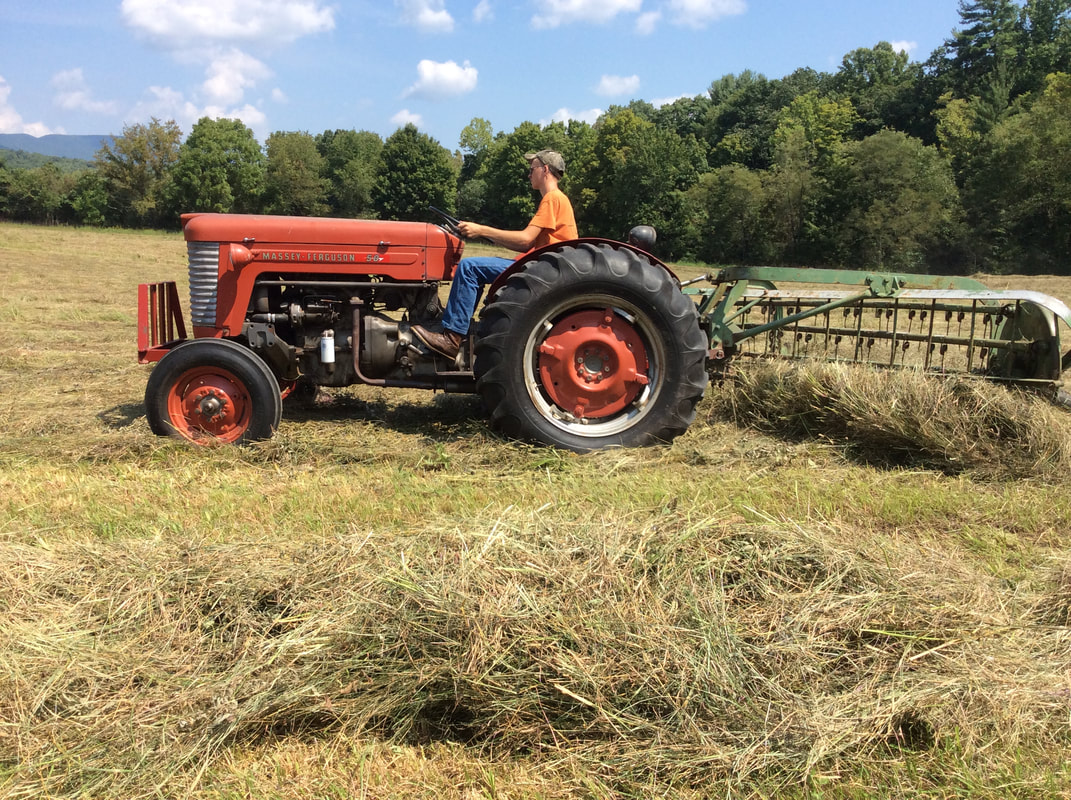 William - my younger son More blog posts to come throughout the New Year - stay tuned!
Merry Christmas from the Jamison Family... (and May the Hay Dog) 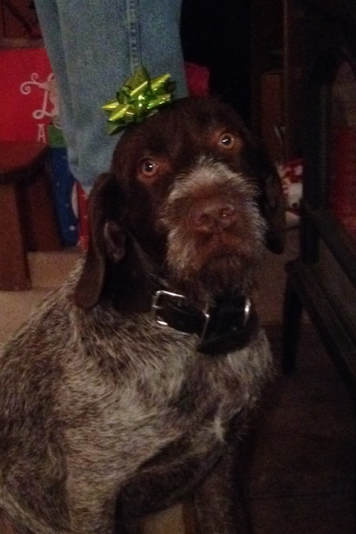 Welcome again to the web page of the Jamison Family Farm. Our website name reflects our continuous goal - First Quality Hay.
This blog is the latest addition to our website and will serve as a place where we can ramble about whatever topic might be on our mind. I create this blog skating on thin ice. I am probably the worst typist and speller on the planet. Sometimes "we" really means "me or I", but it can also mean the whole family - I'll let you figure out which is which. Note: May the Hay Dog is ALWAYS referred as "May", "May-May", "May-Day" or just "The Dog"... Read these blog posts at your own risk! Spring is coming..... Some folks count down to Spring. I'm a little different. Every year I look eagerly or dreadfully towards June 21st or December 21st as they are respectively the longest and shortest daylight days of the year. Rather than count to Spring, I count down to the first day of more daylight each day. December 22nd is that day and in my book is the first day of Summer. Why focus on this? On the farm, daylight is paramount. The more day/daylight, the more we can hope to accomplish. There is a saying, "Make hay when the sun shines." At the Jamison Family Farm, we welcome more daylight! Stay tuned, more blog posts to come. P.S. - In addition to our website, we have a Facebook page. If you know someone who might be interested in our hay, who may have questions regarding our hay or any hay related questions, please share our website and Facebook page with them. Many thanks!!! |